
Blooming
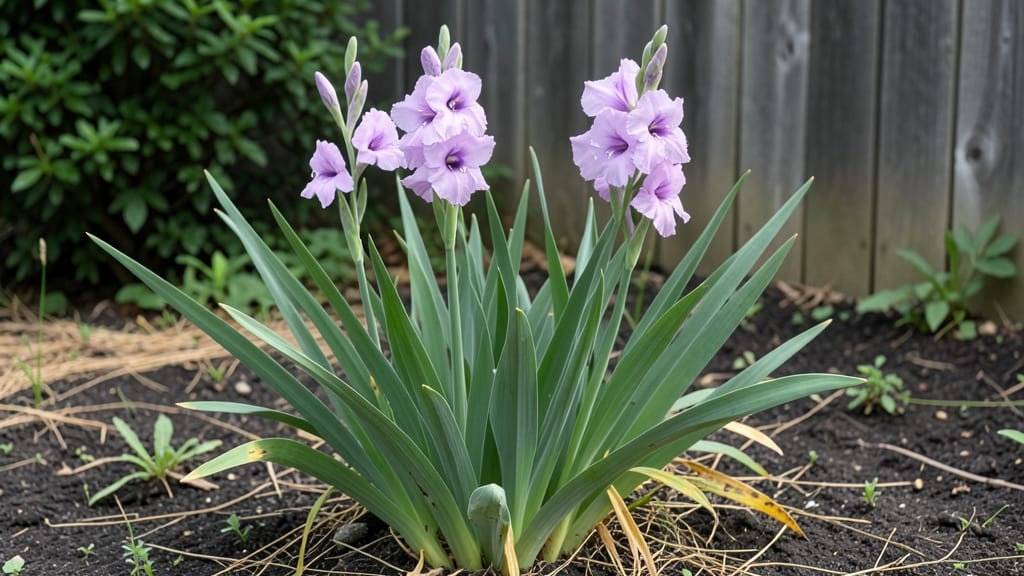
Gladiolas bloom between late summer and early fall, typically from August through October, depending on your climate zone and planting time. Early varieties may flower as soon as July in warm regions, while later ones extend into October.
Timing your gladiolas depends heavily on your local frost dates and seasonal warmth—these flowers need consistent heat to trigger their stunning vertical blooms. 🌸 In cooler climates like USDA zones 6-7, I recommend planting corms in early spring (around April) to ensure blooms arrive by late August, while tropical zone gardeners can enjoy July flowers by planting as late as June.
The key is matching your variety's 100-120 day growth cycle to your area's frost-free window.
What's fascinating is how temperature shifts actually work—gladiolas store energy in their corms during cooler months, then burst into growth when soil reaches 60°F+.
This makes them perfect for succession planting: by staggering corm planting every 2-3 weeks in spring, you can stretch your bloom season from July all the way to November in warmer regions.
💡 In This Article
- Gladiolus Bloom Timing by Climate Zone
- How to Extend Gladiolus Season with Smart Planting
Gladiolus bloom timing by climate zone
Here's what's actually happening underground: gladiolas rely on a precise temperature threshold to trigger their flowering process. The corms need soil temperatures consistently above 60°F (15.5°C) for at least 4-6 weeks before they'll initiate bloom formation.
This is why tropical regions (USDA zones 10-11) can enjoy July blooms—warm winter soils mean earlier planting opportunities. In contrast, northern climates (zones 3-5) often wait until May planting to achieve August-October blooms, as cooler spring soils delay their growth cycle.
The science gets even more interesting when you consider photoperiodism—the light sensitivity that affects bloom timing. Most gladiolas are "long-day" plants, meaning they need 12-14 hours of daylight to trigger flowering.
This explains why early varieties planted in late spring might bloom earlier than expected in northern latitudes, where summer daylight naturally extends. The key factor is matching your planting date to when your region will hit both the 60°F soil temperature AND 12+ daylight hours thresholds simultaneously. 🌡️
Let's break down the practical implications by zone: In USDA zones 6-7, gardeners typically plant in early May for August blooms, while zone 8-9 gardeners can plant as late as June and still enjoy September-October flowers.
Tropical zone 10-11 gardeners have the most flexibility, often planting in late winter (February-March) for summer blooms. The critical calculation is always: 120 days before your first fall frost date minus your corm's specific growth cycle (which varies by variety from 90-130 days).
What most people don't realize is how dramatically elevation affects these timings. A garden at 5,000 feet elevation might experience bloom dates 2-3 weeks later than one at sea level, even in the same latitude zone, due to cooler nighttime temperatures.
This is why mountain gardeners often need to use early-blooming varieties or extend their season with row covers. The 10°F temperature drop per 1,000 feet elevation rule applies directly to gladiolas' growth requirements.
Consider these key temperature milestones for successful blooming:
- Soil temperature: Must reach 60°F (15.5°C) consistently for 4+ weeks to trigger growth
- Optimal growth range: 65-75°F (18-24°C) produces the fastest, healthiest blooms
- Maximum tolerance: 85°F (29°C) - above this, growth slows and flowers may become smaller
- Frost sensitivity: Corms tolerate 25°F (-4°C) but blooms die at 32°F (0°C)
The most reliable way to predict your bloom window is to track your local "growing degree days" (GDD) using this formula: (Daily high + Daily low)/2 - 50°F. When you accumulate 1,000-1,200 GDD after planting, that's when your gladiolas will typically begin bud formation.
This method accounts for both temperature and daylight variations far better than simple calendar dates. 🌡️