
Blooming
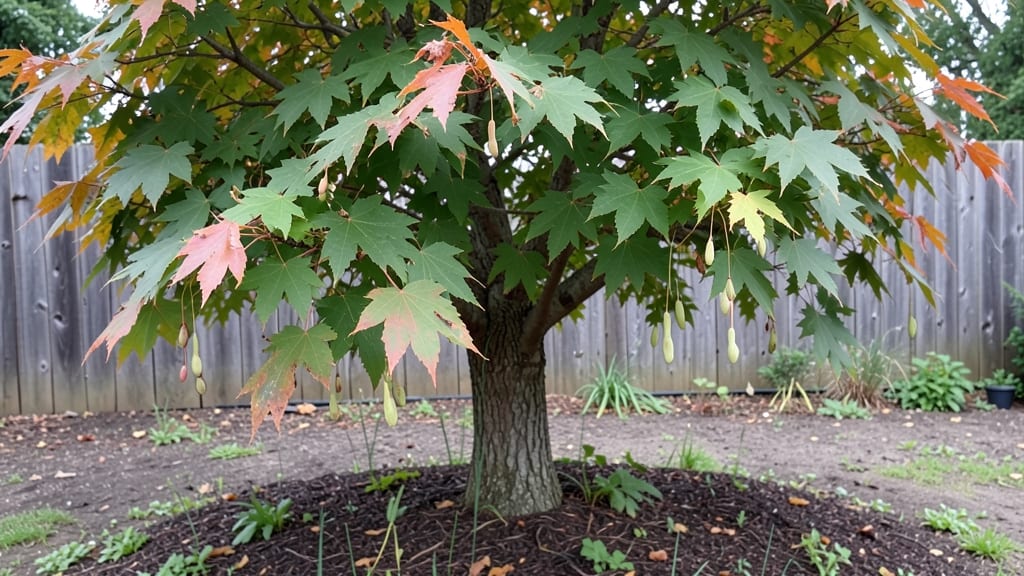
Red maples bloom in early spring, typically between late March and mid-April in most U.S. regions, though timing shifts northward or later in colder zones. Warmer climates may see blooms as early as February, while northern areas delay until May.
Red maples are among the first trees to burst into color each year, with their blooms signaling the arrival of spring's warmth. The timing hinges on accumulated chilling hours during winter—typically 1,000-1,500 hours below 45°F—paired with 50-70°F daytime temperatures to trigger flowering.
In my experience, urban areas often bloom 1-2 weeks earlier than rural spots due to the "heat island" effect, while high-elevation zones may lag by weeks. 🌸
For gardeners, tracking bud swell—when tight clusters appear along branches—is the best early indicator. Historical data from the US National Phenology Network shows blooms can vary by 3-4 weeks even within the same state, so local observations beat general rules.
I always cross-reference with nearby botanical gardens for the most reliable predictions. ✨
💡 In This Article
- Climate Zones and Red Maple Flowering Patterns
- How to Predict Red Maple Blooms in Your Area
Climate zones and red maple flowering patterns
Red maple flowering follows a precise biological clock tied to USDA hardiness zones, where chilling hours (cold exposure) and forcing temperatures (spring warmth) act as triggers.
Trees in zones 5-6 (northern Midwest, Northeast) typically need 1,200-1,500 hours below 45°F to break dormancy, while zone 8-9 (Southeast, Gulf Coast) often require only 800-1,000 hours. This explains why Georgia's red maples may bloom in mid-February while Minnesota's wait until late April. 🌱
The transition from winter dormancy to bloom hinges on a 50-70°F temperature threshold for 7-10 consecutive days. Here's how it breaks down by zone:
- Zones 5-6: Blooms peak in late April to early May after 1,200+ chilling hours and 50°F+ daytime highs persist
- Zones 7-8: Early blooms appear mid-March to April with 900-1,100 chilling hours and 60°F+ triggers
- Zone 9+: February blooms occur after 700-900 chilling hours and 55°F+ warmth
Daylight length also plays a subtle role—red maples are day-neutral but respond to increasing daylight hours (12+ hours) that signal spring's arrival. This is why northern blooms align with the vernal equinox, while southern trees may flower before it.
The USDA's Plant Hardiness Zone Map correlates well with bloom timing, but microclimates (like river valleys) can shift patterns by 3+ weeks. 🌞
What most people overlook is how late-winter frost events can delay blooms. A sudden -5°F dip after buds swell (as seen in 2019's Midwest freeze) can push back flowering by 2-3 weeks.
Conversely, mild winters with consistent 30-40°F temperatures accelerate the process. This variability is why gardeners in zone 6 might see blooms anywhere from late March to mid-May depending on winter severity.
Urban vs. rural differences are striking too. A 2020 study in Atlanta found city red maples bloomed 10 days earlier than rural counterparts due to 5-10°F warmer nighttime temperatures. The tree's internal clock—regulated by FT proteins (florigen transporters)—responds to these subtle environmental cues, making precise predictions challenging without local data.
For accurate timing, I recommend checking National Phenology Network reports for your specific county. 📊
One fascinating exception occurs in high-elevation zones (like Colorado's 6,000+ ft areas). Here, red maples may bloom 3-4 weeks later than valley counterparts due to cooler nighttime temperatures that extend the chilling requirement.
The 1998 USDA study found 1,800+ chilling hours were needed at 8,000 ft elevations—nearly 50% more than at sea level. This elevation effect explains why Denver's red maples often bloom in mid-May while nearby Front Range foothills see them in early April. 🏔️