
Blooming
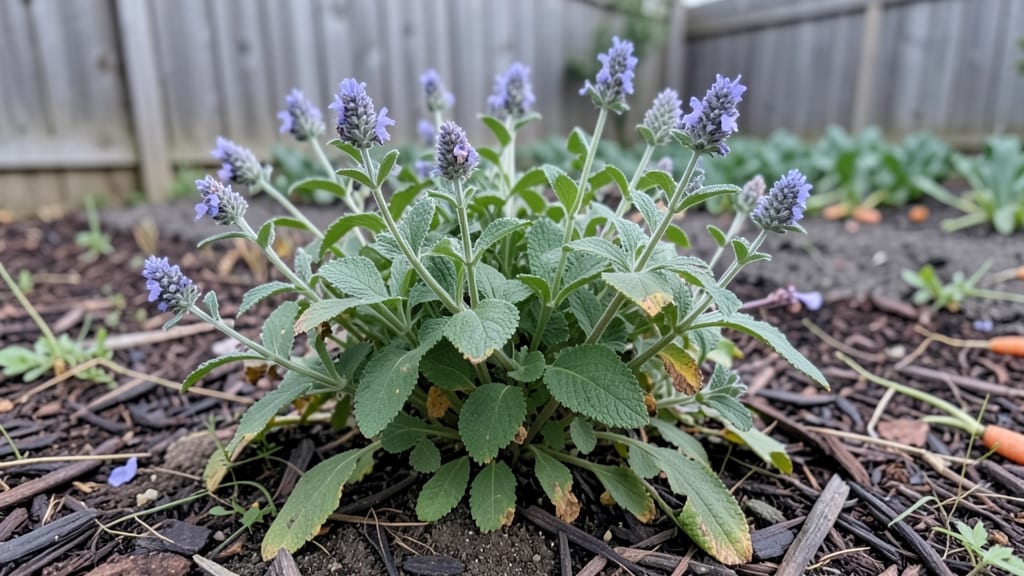
Catmint typically blooms in late spring to early summer, producing vibrant purple, pink, or white flowers that last through midsummer with proper care. Its flowering period can extend into early fall in warmer climates or with deadheading.
Catmint thrives in cooler weather, so its blooming window often aligns with spring's last frost—usually around May to June in most temperate regions. 💫 The plant's resilience lets it handle light frosts, which actually triggers some varieties to burst into color, though heavy freezes can delay or damage buds.
Whether you're growing Nepeta racemosa or Nepeta faassenii, understanding your local frost dates helps predict when to expect those signature lavender spikes.
What sets catmint apart is its adaptability—cooler summers in zones 3-8 can push blooms into July or August, while heatwaves might shorten the display. I've seen gardeners in Southern California coax flowers into September by deadheading spent blooms weekly and providing afternoon shade during peak summer heat.
The key is balancing moisture and nutrients without over-fertilizing, which can lead to leafy growth at the expense of flowers.
💡 In This Article
- Catmint Flowering Timeline by Climate Zone
- Extending Catmint Blooms with Pruning and Care
Catmint flowering timeline by climate zone
Catmint's blooming schedule is heavily influenced by temperature shifts and daylight hours, with USDA hardiness zones 3-8 experiencing the most dramatic variations.
In cooler northern zones (3-5), where winters dip below -20°F, catmint often waits until late May to June to bloom, triggered by consistent soil temperatures above 50°F and 14+ hours of daylight.
The plant's native habitat in mountainous regions of Europe and Asia means it's adapted to these gradual warm-ups, avoiding sudden heat stress that could scorch delicate buds.
Southern zones (7-8) see an earlier start, sometimes as early as April, but blooms may fade faster in 90°F+ heat without afternoon shade. Here's how the timeline breaks down by region:
- Zones 3-5: Late May-July (peak in June), with potential second flush in September if deadheaded
- Zones 6-7: May-July, extending to August with proper care
- Zones 8-9: April-June, often with a weaker summer rebloom
What most gardeners don't realize is how daylength photoperiodism affects catmint's second blooming cycle. In zones 5-6, the plant detects shortening days in late July and may produce a modest second flush if given balanced 10-10-10 fertilizer (phosphorus for blooms).
In warmer zones, this response is muted because the plant prioritizes survival over reproduction during summer heat. The Nepeta racemosa variety is particularly sensitive to these cues, often producing taller spikes than the more compact Nepeta faassenii.
Annual catmint varieties (like Nepeta mussinii) follow a different rhythm, blooming 6-8 weeks after sowing when daytime highs reach 65-75°F. These types don't have the same frost triggers, making them better suited for zone 9+ gardens where perennials might struggle.
The trade-off? Annuals typically produce 20-30% more flowers per plant but require replanting each season.
Here's a pro tip: In zone 4 gardens, mulch with 3-4 inches of straw in early spring to warm soil faster and jumpstart blooming by 2-3 weeks. The insulation also protects roots from late frosts that can blacken emerging buds.
For zone 8+ growers, the opposite strategy works—providing afternoon shade cloth (30-50%) extends the bloom period by 4-6 weeks by reducing heat stress.
Remember that catmint's flowering timeline isn't just about temperature—it's a delicate balance of moisture, nutrients, and light.
In my zone 5 garden, I've found that adding composted manure in early spring (not fresh!) provides the nitrogen needed for leaf growth while maintaining phosphorus levels above 100 ppm for robust blooms. The result? Flowers that last from late May through September with minimal deadheading.