
Blooming
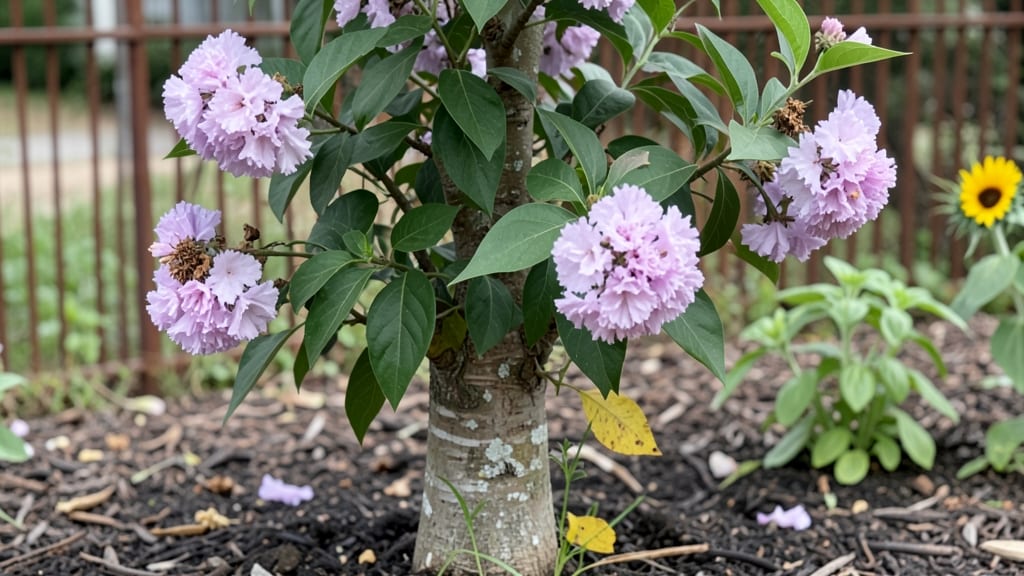
Crepe myrtle starts blooming in late spring to early summer, typically between May and June in most U.S. zones, though warmer climates may see flowers as early as April. Varieties like 'Natchez' bloom first, while others like 'Muskogee' follow weeks later.
Timing can vary dramatically based on where you live—coastal areas often see flowers appear weeks earlier than inland regions due to milder winters and longer daylight hours. 🌸 For instance, Louisiana gardens might spot 'Natchez' blooming by early May, while gardeners in Ohio could wait until late June for the same variety.
Understanding your specific zone helps predict not just when to expect those vibrant clusters, but also how long the blooming season will last.
What's fascinating is how these trees respond to temperature shifts. A sudden heatwave can trigger early blooming, while cooler springs may push flowers back by weeks.
I've noticed that well-established trees tend to bloom more reliably than younger ones, which sometimes need a few extra years to sync their cycles with seasonal cues.
💡 In This Article
- Crepe Myrtle Bloom Timing by U.S. Hardiness Zones
- Tips to Encourage Early Crepe Myrtle Blooms
Crepe myrtle bloom timing by U.s. hardiness Zones
The blooming window for crepe myrtle shifts dramatically across U.S. hardiness zones due to temperature and daylight triggers. These trees rely on consistent daytime temperatures above 60°F and 14+ hours of daylight to initiate flowering.
In Zones 7-9 (common in the South), blooms typically begin in late April to early May, while Zones 4-6 (Midwest/Northeast) see flowers emerge between late May and June. The difference stems from how quickly soil warms and how long frost-free periods last each year.
Here's what's actually happening at the cellular level: Crepe myrtles produce florigen, a protein hormone triggered by warm temperatures and long daylight. Once florigen reaches critical levels, flower buds form.
In Zone 9 (e.g., Houston), trees might start producing florigen by March 15, while Zone 5 (e.g., Chicago) often waits until May 1. This explains why 'Natchez' blooms 3-4 weeks earlier than 'Muskogee'—its genetic makeup responds more aggressively to temperature cues.
Regional variations create fascinating patterns. Coastal areas in Zone 8 (e.g., Savannah) often bloom 2 weeks earlier than inland Zone 8 locations (e.g., Atlanta) due to maritime influence. Meanwhile, Zone 10 trees (e.g., Miami) may bloom as early as February if winter temperatures stay mild.
The key factor is cumulative heat—trees need at least 1,500 growing degree days (calculated as average daily temp minus 50°F) to trigger reliable blooming.
What most people don't realize is how sunlight duration affects timing. Trees in northern latitudes (e.g., Zone 6) need 16+ hours of daylight before blooming, which doesn't occur until late May. In contrast, Zone 9 trees experience these daylight conditions by early April.
This explains why the same variety can bloom 6 weeks apart between New York and Georgia—it's not just temperature, but the combination of heat and light that triggers the process.
Consider these key factors when predicting your tree's bloom window:
- Zone 4-5: Blooms late May to June (e.g., Detroit)
- Zone 6-7: Blooms May to early June (e.g., Nashville)
- Zone 8-9: Blooms April to May (e.g., Atlanta)
- Zone 10+: Blooms February to March (e.g., San Diego)
The science behind these variations involves vernalization—a process where trees "remember" winter chill hours. Most crepe myrtles need 300-600 hours below 45°F to break dormancy properly. Without sufficient chill, blooms may be sparse or delayed.
This is why Zone 10 trees sometimes bloom less prolifically than Zone 7 trees—they miss the winter chill period that primes the flowering mechanism.
Here's a pro tip: If your tree blooms later than expected, check for water stress or nutrient deficiencies.
Trees need well-draining soil with pH 6.0-7.0 and balanced NPK fertilizer (10-10-10) in early spring to support optimal flowering. 🌿 The right conditions can shift bloom timing by up to 3 weeks!