
Blooming
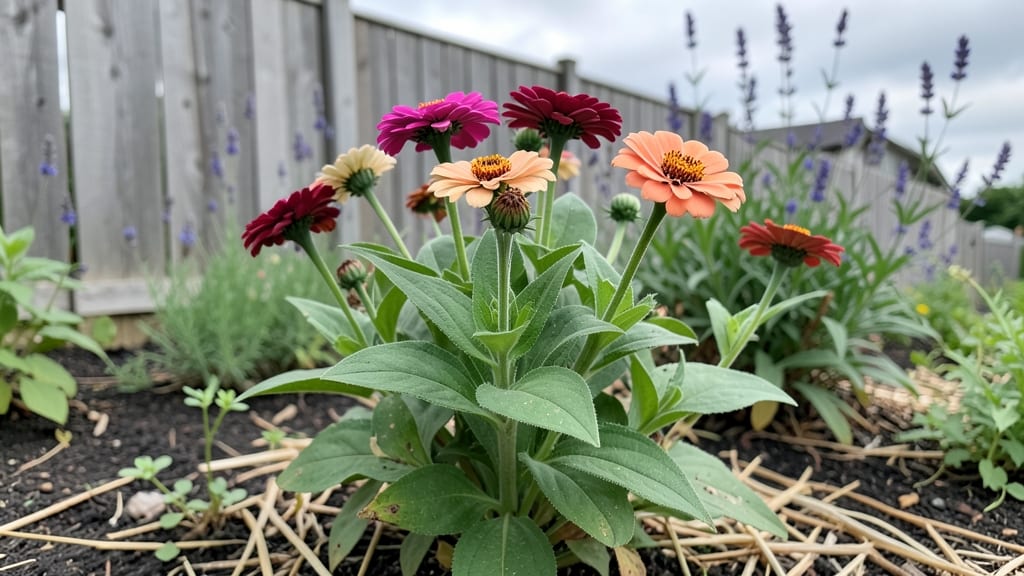
Zinnias bloom approximately 60 to 70 days after planting from seed, typically starting in mid-to-late summer (June to August in most U.S. zones) and continuing until frost. Early varieties may flower as soon as May, while late varieties extend blooms into fall.
Timing isn’t just about days—it’s also about daylight.
Zinnias thrive on long summer days, which is why their peak bloom aligns with June through August in most regions. 🌞 I’ve seen early varieties like 'Thumbelina' burst into color by late May, while heat-tolerant types like 'Benary’s Giant' keep flowering until frost. The key?
Planting depth and soil warmth play a bigger role than many gardeners realize—seeds need consistent 60-70°F soil to germinate reliably.
What’s fascinating is how daylight hours trigger blooms—zinnias need at least 12-14 hours of light daily to set flowers. In northern zones, this means waiting until late June for consistent blooms, while southern gardeners might see flowers as early as May.
Pro tip: Succession planting every 2-3 weeks ensures continuous color from summer through fall, even in shorter-season climates.
💡 In This Article
- Zinnia Flowering Stages by Variety and Climate Zones
- Extending Zinnia Blooms: Pruning and Seasonal Care Tips
Zinnia flowering stages by variety and climate zones
Zinnias are primarily annuals, meaning their flowering cycle is tightly linked to seasonal daylight changes. The 60-70 day bloom timeline starts from seed germination, but this varies dramatically between varieties.
For example, dwarf varieties like 'Thumbelina Mix' often bloom in just 50-55 days, while giant cultivars such as 'Benary's Giant' take closer to 70-80 days. This difference occurs because taller varieties allocate more energy to stem and leaf growth before flowering, a biological trade-off for structural support.
The USDA hardiness zones create significant timing variations. In Zone 5 (e.g., Chicago, Minneapolis), zinnias typically bloom from late July through September due to cooler spring soils delaying germination.
Conversely, in Zone 10 (e.g., Los Angeles, Miami), planting in February-March yields blooms as early as May, with continuous flowering until first frost. The critical factor is soil temperature - seeds won't germinate reliably below 55°F, which explains why northern gardeners often wait until after Memorial Day.
Daylight length acts as a natural switch for flowering. Zinnias are long-day plants, meaning they need 12-14 hours of daylight to trigger bloom production. This explains why northern gardeners see delayed first blooms - they must wait until summer solstice when days exceed 14.5 hours.
In southern climates, this threshold is reached much earlier. The variety 'Profusion' demonstrates this perfectly - it blooms 55-60 days after planting but requires 13+ hours of light daily to maintain consistent blooming.
Perennial zinnias (like Zinnia grandiflora) behave differently. While most zinnias are annuals, these varieties can overwinter in Zones 8-10, producing blooms the following spring from established roots. Their first flush often appears 4-6 weeks earlier than seeded annuals because they've already developed a root system.
However, they're less cold-hardy than their annual cousins, typically dying back in Zone 7 winters.
Color also plays a subtle role in timing. Darker varieties (like deep red or purple zinnias) tend to bloom 5-7 days later than lighter colors (white, yellow) because their pigments require more energy to produce.
This is why seed packets often list "days to bloom" ranges - the variation accounts for both genetic differences and environmental conditions. For instance, a red 'Double Click' might bloom in 65 days while a yellow 'Crystal' achieves flowers in 58 days under identical growing conditions.
What most gardeners miss is how nighttime temperatures affect blooming. Zinnias need nights above 55°F to set buds properly. In cooler climates, this means blooms may appear stunted or fail to open completely until late summer when nights warm.
This explains why southern gardeners often get larger, more vibrant flowers earlier in the season compared to northern counterparts.