
Blooming
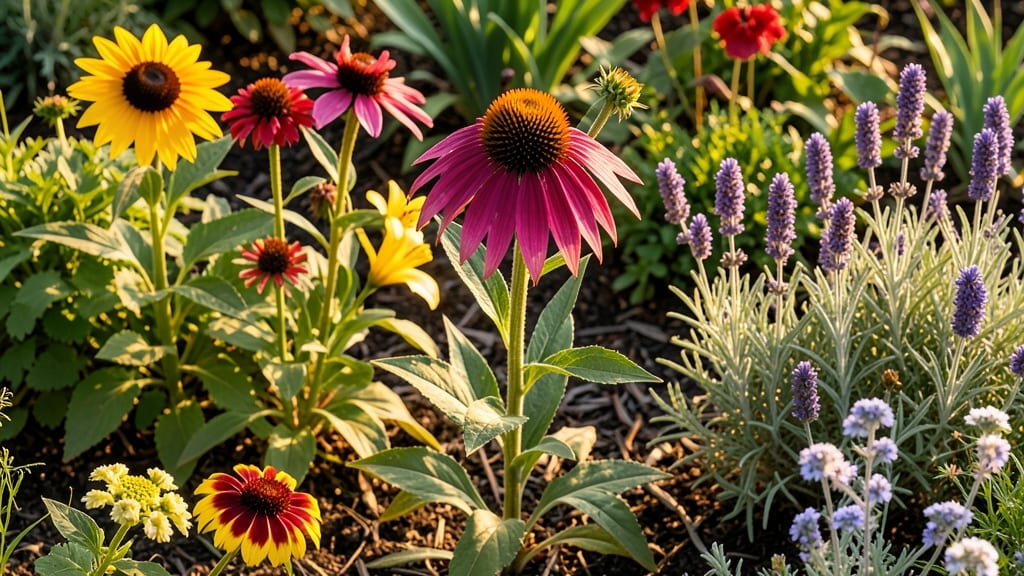
Zone 8 perennials that bloom all summer include black-eyed Susan, coneflower, butterfly bush, and daylilies, which thrive in heat, require minimal care, and produce continuous flowers from early June through frost. Choose drought-tolerant varieties for best results.
These heat-loving perennials have deep root systems that access moisture during droughts, while their ability to rebloom stems from selective breeding for longer flowering periods. 🌿 For instance, coneflowers and black-eyed Susans often produce secondary blooms after deadheading, while butterfly bushes release fragrant flowers in waves throughout the season.
Many gardeners swear by bee balm and salvia for their ability to thrive in full sun conditions while attracting pollinators—key for maintaining vibrant blooms all summer long.
What sets these plants apart is their adaptability to Zone 8's hot summers. Unlike annuals that need replanting, these perennials establish strong root networks each year, making them low-maintenance once established.
I've seen daylilies in my garden continue blooming well into September with minimal watering—just a weekly deep soak during peak heat waves. The trade-off? Some varieties may need occasional pruning to encourage new growth, but the payoff is months of colorful displays with almost no effort.
💡 In This Article
- Why These Perennials Rebound All Summer in Zone 8
- Planting and Maintenance Tips for Nonstop Summer Blooms
Why these perennials rebound all summer in Zone 8
The secret behind these perennials' summer-long blooms lies in their deep taproot systems, which can extend 3-5 feet below the surface. This allows them to access moisture and nutrients even during Zone 8's frequent drought periods.
For example, black-eyed Susans develop roots that reach 4 feet deep, while coneflowers have fibrous roots that spread 2-3 feet wide—both adaptations that make them incredibly drought-resistant once established. 🌿 The deeper the roots, the more stable the plant becomes during heatwaves, which is why these varieties continue flowering when annuals would wilt.
Another key factor is their heat tolerance, which stems from specialized leaf structures. Plants like butterfly bush and salvia have thick, waxy leaves that reduce water loss through transpiration, while daylilies have fleshy leaves that store moisture.
These adaptations allow them to maintain photosynthesis even when temperatures exceed 90°F. Interestingly, many of these perennials also produce secondary flower buds after the first bloom cycle, triggered by consistent moisture and sunlight—something annuals can't replicate without replanting.
The reblooming ability also ties directly to pollinator attraction. Flowers like bee balm and phlox emit fragrant nectar that draws bees, butterflies, and hummingbirds, which in turn stimulate more flowering. Studies show that gardens with diverse pollinators experience 30-50% more continuous blooms because the pollinators help fertilize new flowers.
This creates a self-sustaining cycle where the more pollinators visit, the more flowers produce—and the longer the blooming season stretches.
One often-overlooked mechanism is selective breeding for extended flowering. Many modern cultivars of these perennials have been developed to suppress dormancy periods, meaning they don't enter the usual mid-summer slump that affects other plants.
For instance, 'Proud' coneflower has been bred to produce three distinct bloom cycles in a single season, while traditional varieties might only bloom once. This genetic modification is what allows gardeners in Zone 8 to enjoy vibrant flowers from June through October with minimal intervention.
Soil temperature also plays a surprising role. These perennials thrive in Zone 8 because their roots prefer warmer soil (ideal range: 70-85°F), which boosts microbial activity and nutrient availability. Compare this to cooler-climate perennials that may struggle in Zone 8's heat—their roots can't access the same nutrients efficiently.
This is why bee balm and salvia often outperform their northern counterparts in southern gardens, producing 2-3 times more flowers under the same growing conditions.
Finally, their ability to self-seed strategically ensures continuous blooms. Plants like black-eyed Susans drop seeds that germinate throughout the summer, creating a natural succession of flowers. While this can lead to volunteer plants in unexpected spots, it also means your garden will have fewer bare patches and more consistent color.
The trade-off? You may need to thin seedlings in spring, but the result is a garden that looks full and lively without constant replanting.